Misinformation research has a stimulus problem. The material has to be false in a way participants could plausibly encounter, current enough to matter, and controlled enough to support an inference — and those three requirements pull against each other. A curated set of false headlines is controlled but ages quickly and may already be familiar. Real posts scraped from a platform are current but uncontrolled, and the researcher cannot manipulate what a real post says.
Two papers published in Scientific Reports this year attack that problem from opposite directions. Both built their tasks in lab.js. Neither is a study of software, but the designs are unusually instructive as engineering, because each one moves the ecological validity into a different layer and leaves the task itself conventional.
Design one: generate the stimuli from live news, at the moment it breaks
Shevchenko, Buchanan and Reips ran a fifteen-day experience-sampling study in which the news participants judged did not exist when the study began (2026, Scientific Reports, 10.1038/s41598-026-39555-8). Experience sampling here means repeatedly surveying people in their ordinary daily settings rather than bringing them into a lab. The surveys were programmed in lab.js and hosted on Open Lab.
The pipeline sits outside the experiment software. A Node.js application watched an RSS feed —
Tagesschau for German-speaking participants, BBC News for English-speaking ones — polling once a
minute. Three time windows were defined (09:00–13:00, 13:00–17:00, 17:00–21:00 in the participant's
local time), and only the first item to appear in each window was used, which capped delivery at three news items a day. Each item was stripped of HTML, then passed to a language model (OpenAI's
gpt-4-0125-preview) with a prompt asking for two rewrites of the same length: one that stays as
close to the original as possible, and one that introduces misinformation. Original and both variants
were stored, and a notification was pushed through the Samply Research app, which participants had
installed at the start of the study.
Three decisions in that description are worth separating out, because they are the transferable part.
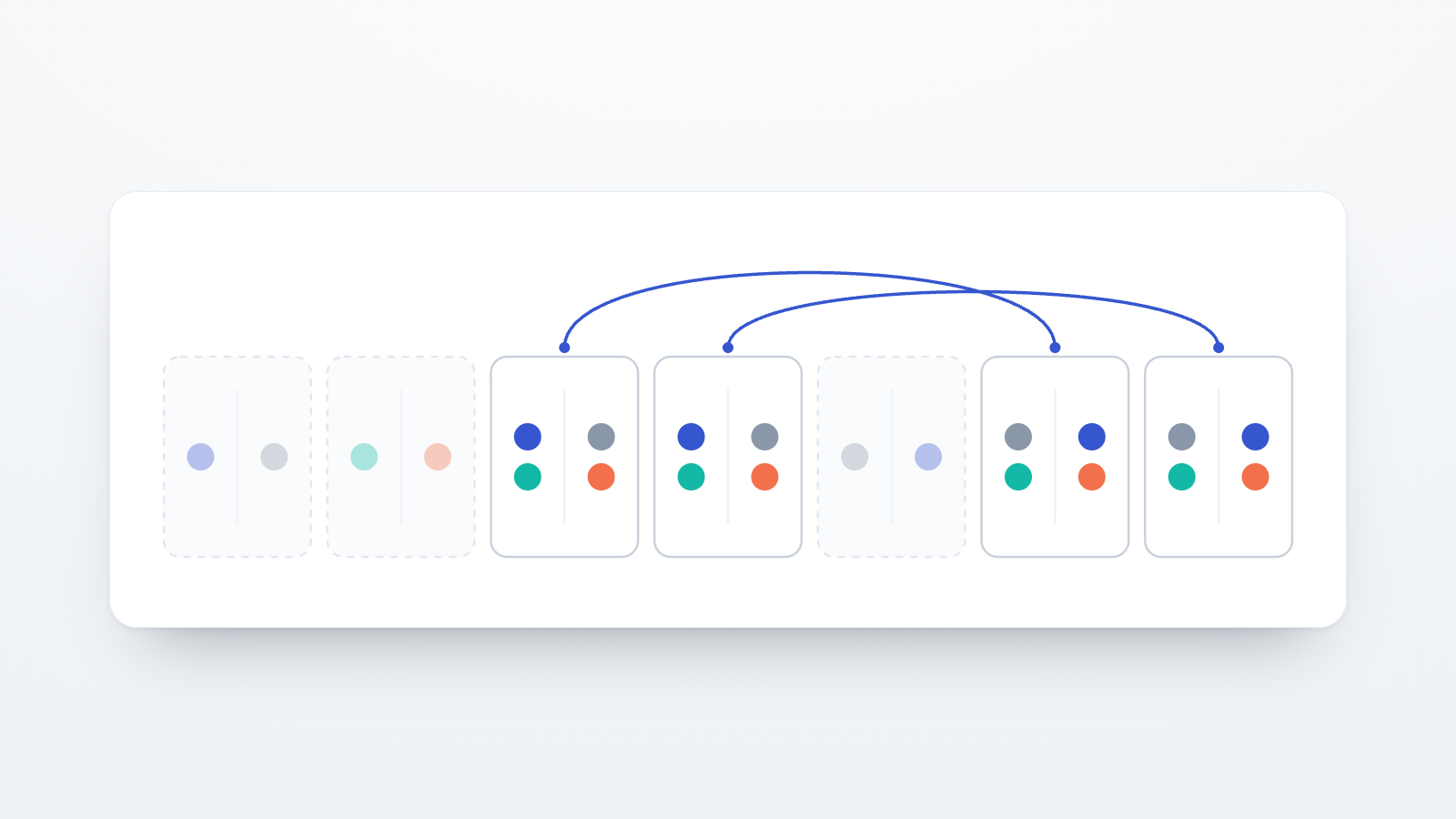
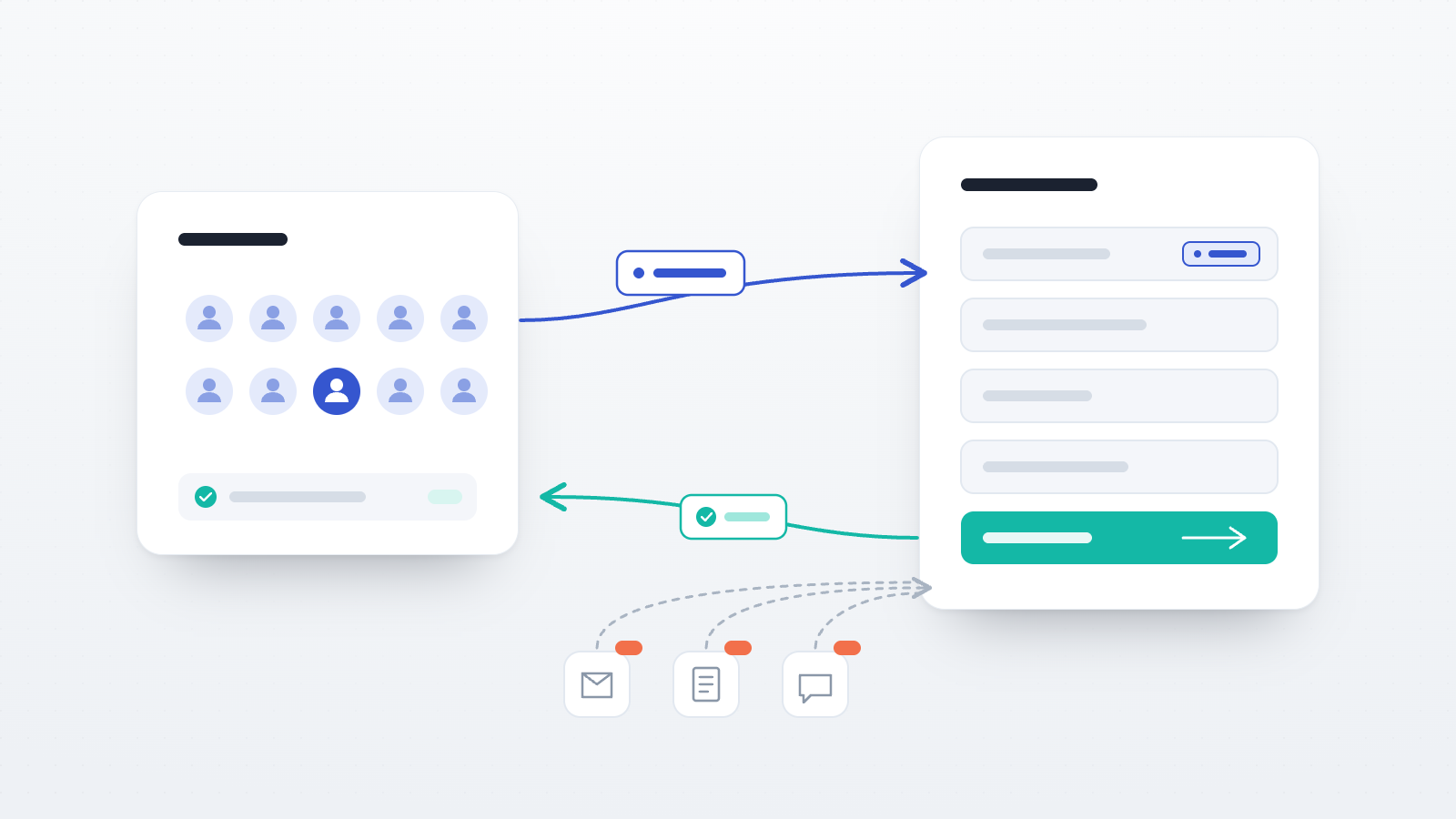
The notification carries a link, not the stimulus. The push message contained no news text. When a participant tapped it, the survey opened and fetched the assigned version from a per-item web link. A notification preview is not a controlled presentation — it is visible on a lock screen, for an unknown duration, outside the experiment — so keeping the stimulus out of it preserves the timing manipulation described below. Any study that pushes stimuli to a phone faces this, and the fix is architectural rather than statistical.
The paraphrase condition controls for the model, not the message. Each survey randomly assigned one of three versions: the original text, a paraphrase, or the misinformation variant. The paraphrase is the methodologically interesting one. Without it, any difference between original and false items is confounded with the simple fact of having been rewritten by a language model — different cadence, different word choice, a certain flatness. The paraphrase condition holds the rewriting constant and lets the misinformation manipulation stand alone. This generalises directly: any design that uses generated stimuli needs a generated control, not an untouched original as its only comparison.
The time constraint is a display rule, not an instruction. In the constrained condition the headline appeared for seven seconds and was then replaced by the questions. In the unconstrained condition the headline stayed on screen alongside the questions indefinitely. Judgment time itself was never limited, deliberately, so that pressure would not manifest as non-response. Both conditions varied within participants, assigned at random per survey.
The debriefing is also worth copying. At the end of every single survey, participants were told which version they had seen; where the text had been modified, the original and the modified version were shown side by side, and a link to the real story on the source site was offered, with clicks recorded. A misinformation study that corrects the record once, at the end of two weeks, leaves participants holding false claims for a fortnight. Correcting per trial is more work and a better answer.
What it cost to run: 110 participants, recruited from a university participant pool, completing an average of 39 daily surveys each — about 93% of those sent — over fifteen days, yielding 4,189 analysable trials. The headline finding was that participants rated false news as less accurate than true news, but that this discernment shrank under the seven-second constraint.
Design two: keep the paradigm, change what it looks like
Stump, Hartmann and Klauer took the opposite route (2026, Scientific Reports, 10.1038/s41598-026-61449-y). Rather than making the stimuli real, they took a thoroughly established laboratory paradigm and rendered it in the visual language of a social platform, asking whether the effect survives the move. Their experiment was programmed in lab.js and run with participants recruited through Prolific.
The paradigm is the illusory truth effect: statements a person has encountered before are judged more likely to be true than statements they have not, simply because repetition makes them easier to process. The structure is standard and the paper follows it closely. In an exposure phase, 52 statements appeared one at a time and participants rated how interesting each was — a task that requires reading without asking about truth. The first and last six were buffers against primacy and recency effects, leaving 40 scored items. A five-minute filler task followed: alternating blocks of go/no-go responses to coloured circles and symmetry judgments on shapes, chosen to be non-verbal so as not to interfere with memory for the statements. Then the judgment phase presented 80 statements — the 40 seen before plus 40 new ones — each judged true or false by keypress, followed by a confidence rating from 1 to 6.
The modification is that in the judgment phase, every statement was displayed as an Instagram-style post. Half the participants saw posts with visible like counts and half saw posts without, between subjects. For those who saw them, the counts were manipulated within subjects: high-like posts showed a randomly generated figure between 20,000 and 80,000, low-like posts between 500 and 2,000.
The stimulus control behind this deserves attention, because it is the part that makes the comparison interpretable. The statements were drawn from a pretested set selected to be genuinely difficult — mean truth ratings near the middle of the scale, so that participants have no confident knowledge to fall back on — and restricted to affectively neutral content across geography, biology, politics and history, science, and entertainment. They were matched on length, averaging 7.34 words and 49.60 characters, with true and false items closely comparable on both. Statement sets were counterbalanced across the exposure and judgment phases, so no item was permanently assigned to the "repeated" condition.
The result was that like visibility did not measurably change either the illusory truth effect or the parallel effect on confidence. Like magnitude did matter, but mainly for statements participants were seeing for the first time — that is, when the repetition cue was unavailable, the social cue was used instead.
The common move: put the realism outside the task
Read side by side, the two designs make the same structural choice from opposite ends.
The first study's task is plain. A headline, a five-point accuracy rating, a sharing-intention question, a familiarity check, a few questions about where the participant is and how noisy it is. Any of that could have been built a decade ago. What is new sits entirely outside the experiment: the feed listener, the generation step, the notification schedule, the per-item links.
The second study's delivery is plain — a browser, a Prolific link, one sitting. What is new sits entirely inside the presentation layer: statements dressed as posts, with a manipulated social cue attached.
Neither team rebuilt an experiment engine. In both cases the task remained a sequence of screens with recorded responses, which is what lab.js already does well, and the ambitious part was pushed into a place where it could be built and tested independently. For a researcher weighing whether a design is feasible in a browser, that separation is the useful lesson: the question is rarely "can the experiment software do this" and usually "what has to exist around it".
Four things worth borrowing
Generated stimuli need a generated control. If a language model writes the false items, something model-written has to appear in the comparison condition too, or the model's writing style is part of the effect.
Keep the stimulus out of the notification. Anything visible on a lock screen has been presented outside the experiment, for an uncontrolled duration. Send an identifier and let the task fetch the content.
Match your stimuli on the boring dimensions. Length, difficulty, and affective content were matched in the second study before anything interesting was manipulated. This is what allows a null result — like visibility not moving the effect — to be informative rather than ambiguous.
Decide the debriefing at design time, not at the end. Per-trial correction with the original shown alongside the modification is a real design constraint. It changes the length of every survey, and it is easier to build in from the start than to add once the flow is fixed.
Summary
Both papers are open access, and both are more detailed about their procedures than a summary can be — the first includes its full model prompt, and the second documents its stimulus set on OSF. Read as methods rather than as findings, they are two worked answers to the same question about how much of the world a browser experiment can be asked to carry, and they disagree productively about where the answer lies.