Bachelor's and master's students can apply for a complimentary Basic plan for their thesis study, and instructors can request a free teaching plan for lecture demonstrations and courses. From 6 November 2026, the Free plan for new accounts changes to two studies with up to 50 participants each, a size meant for trying Open Lab and piloting a study. Accounts created before 6 November 2026 keep their Free plan limits, one study with up to 300 participants, without an end date. Paid plans are not affected.
Sponsorship for thesis studies
The sponsorship lets students without a research budget run a complete thesis study on Open Lab. It gives a complimentary Basic plan for six months, renewable once on request:
- up to five studies with 1,000 participants each
- data kept for 36 months, or indefinitely if the study is set to keep it
- the full data-quality workflow, which flags inattentive and automated responses
- any paradigm from the Task Library
- Excel and JSON export in addition to CSV
The application asks for a named supervisor and an institutional email address or ORCID iD on the account, and receives a reply within five working days.
Apply for a thesis sponsorship
Free teaching plans for lectures and courses
Open Lab supports teaching as well as research, and teaching plans are free for instructors at universities and colleges. The plan depends on how a course uses Open Lab:
- Lecture demonstrations and class datasets. Instructors receive the Pro plan free of charge for the length of the term, up to six months, and can renew it for the next term. Students take part on their own devices through a link or QR code, without an account. Presentation mode shows the class results on the projector as soon as the students finish, and the data stays in the study for later statistics exercises. Tasks from the Task Library come with teaching notes, which give the typical size of the effect, discussion questions and common pitfalls.
- Courses where students run their own studies. Students join the instructor's projects as collaborators and share the Team plan while the course runs, with one project for each student group. The first term on the Team plan is free for each instructor, and the plan is paid at the academic rate after that.
- Workshops. Participants use the Free plan with their own account. Two studies with up to 50 participants each are enough to build and run a study during a workshop.
Instructors are verified by an institutional email address or ORCID iD.
Why the Free plan allowed 300 participants
The limit of 300 participants per study was chosen with students in mind. Bachelor's and master's students rarely have a budget for research software, and the limit was meant to let them run thesis studies with adequate statistical power at no cost. For example, a comparison of two independent groups needs 64 participants per group, 128 in total, to detect a medium effect (d = 0.5) with 80% power at α = .05 (Cohen, 1988). With a little over half of enrolled participants completing a study, 300 enrolments usually give 150 to 180 complete datasets, which is enough for this design.
How Open Lab is funded
Open Lab is developed and maintained by a small company, Open Lab Online UG. Its maintenance and development are paid for by subscriptions from researchers and labs that have a budget for their studies, and this income allows Open Lab to offer the platform at no cost to students who have none and to instructors for their teaching. Open Lab chose this model over relying on research grants. Grants run for a fixed period and are tied to the aims and conditions of the funding agency, so a platform that depends on them may go unmaintained when a grant ends. Subscription income is not tied to a funding period, which allows the platform to be maintained and developed continuously.
The What's new page lists the features added each month since the new Open Lab opened in March 2026, more than 100 so far. They include the Task Library of ready-to-run paradigms, checks that flag inattentive and automated responses, projects shared by several analysis teams or data-collection sites, and the study archive with citable public record pages.
Why the Free plan is changing
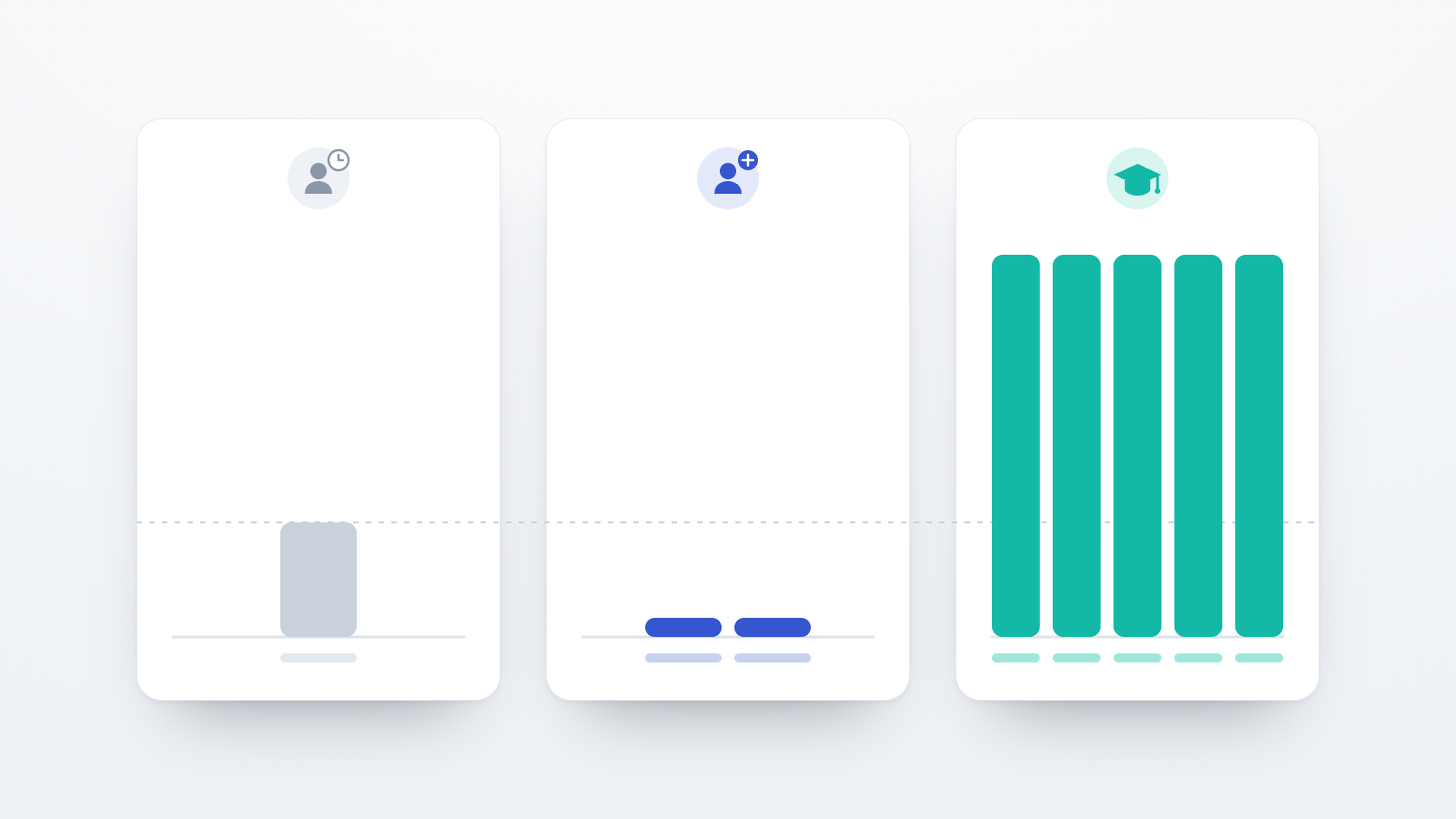
The 300-participant limit also covered the complete study for almost everyone else who used the Free plan. Of researchers who never subscribed, 96% never needed more than 300 participants, so few Free users had a reason to subscribe. From 6 November 2026, the Free plan for new accounts is meant for trying Open Lab and piloting a study, and complete studies run on a paid plan. Open Lab still aims to support students who have no study budget, and this is the reason for the thesis sponsorship: a complimentary Basic plan with 1,000 participants per study, more than the 300 that the Free plan allowed.
What 50 participants means in practice
A participant counts toward the limit when they open the study, whether or not they finish. Across Open Lab a little over half of enrolled participants complete a study, so 50 enrolments usually give 25 to 30 complete datasets. That is enough to check that the tasks run on participants' devices, that the instructions are understood and that the data come out as planned. Previews and test runs do not count.
The plans side by side
| Free, accounts created before 6 November 2026 | Free, accounts created from 6 November 2026 | Thesis sponsorship (Basic) | |
|---|---|---|---|
| Studies | 1 | 2 | 5 |
| Participants per study | 300 | 50 | 1,000 |
| Data kept | 12 months | 12 months | 36 months, or indefinitely |
| Runs for | no end date | no end date | 6 months, renewable once |
Questions about the change can be sent to info@open-lab.online.